Evaluating Halloween Coffee Digital Assets for Creative Projects and Commercial Use
As the autumn season approaches, creative professionals and hobbyists alike begin scouting for thematic elements that capture the essence of October. Among the myriad of seasonal motifs, Halloween Coffee has emerged as a distinct and versatile niche. This concept blends the cozy, comforting imagery of hot beverages with the whimsical, sometimes spooky aesthetics of Halloween. For designers, crafters, and small business owners, selecting the right digital assets to represent this theme is a critical decision that impacts the quality and versatility of the final product. Understanding what constitutes high-quality Halloween Coffee artwork, how different file formats serve specific needs, and when to utilize vector versus raster graphics is essential for making an informed choice.
Defining the Aesthetic and Utility of Halloween Coffee Themes
Halloween Coffee is more than just a picture of a mug with a ghost on it; it represents a specific intersection of lifestyle and holiday branding. The aesthetic typically combines warm tones associated with coffee—browns, creams, and deep oranges—with traditional Halloween palette accents like black, purple, and neon green. Distinctive elements often include steam rising in the shape of bats, pumpkins nestled beside ceramic cups, or typography that mimics dripping syrup or eerie fog.
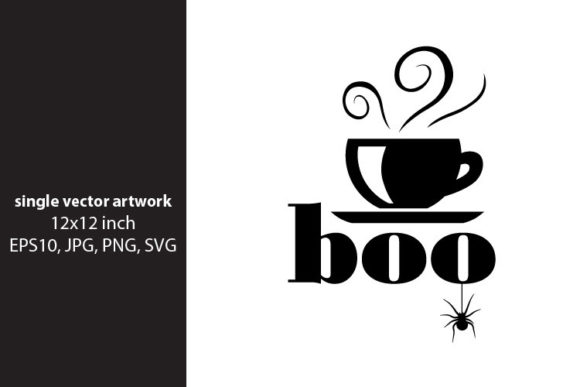
What makes this category distinct from general Halloween graphics is its dual appeal. It targets two massive audiences simultaneously: coffee enthusiasts and holiday celebrants. For a designer, this means the artwork must balance cuteness with spookiness without leaning too far into horror, which might alienate the "cozy" demographic. When evaluating a single vector artwork package for this theme, one must look for clarity in these thematic blends. Does the steam look inviting yet magical? Is the typography legible while still stylized? These nuances determine whether the asset will resonate with the intended audience across various applications, from cafe menus to handmade greeting cards.
The Critical Role of File Formats in Project Execution
When acquiring digital graphics, the included file formats are often more important than the image itself. A comprehensive package for Halloween Coffee designs should ideally provide a spectrum of formats to ensure compatibility with different tools and end-uses. Understanding the tradeoffs between these formats is key to maximizing the value of your purchase.
Vector Files (SVG and EPS)
Vector graphics are the gold standard for scalability. In the context of Halloween Coffee artwork, having access to SVG (Scalable Vector Graphics) and EPS (Encapsulated PostScript) files is non-negotiable for professional results. Unlike pixel-based images, vectors use mathematical paths to define shapes. This means you can resize a small icon of a coffee cup to the size of a billboard without any loss of quality or pixelation.
- SVG: Ideal for web design, app interfaces, and modern cutting machines used in crafting (such as Cricut or Silhouette). If your goal is to create vinyl decals for coffee shop windows or iron-on transfers for t-shirts, the SVG format offers clean cut lines and transparency by default.
- EPS: This is the industry standard for print production. Saved as Adobe Illustrator version 10, an EPS file ensures backward compatibility with older software versions while maintaining high fidelity. It is the preferred choice for professional printers creating large-format banners, signage, or high-volume stationery runs.
Raster Files (JPG and PNG)
While vectors handle scaling, raster files are often necessary for quick previews, social media posts, or projects where vector editing software is unavailable.
- JPG (300 DPI): Joint Photographic Experts Group files are universally compatible. A 300 DPI (dots per inch) resolution ensures that the image is print-ready for standard paper sizes. However, JPGs do not support transparency, meaning the background is baked into the image. This limits their use to projects where a solid background is acceptable or desired.
- PNG (300 DPI with Transparent Background): The Portable Network Graphics format bridges the gap between ease of use and professional utility. The inclusion of a transparent background is crucial for layering. For instance, if you are designing a party invitation, a transparent PNG allows you to place the Halloween Coffee mug directly over a patterned paper texture without a white box surrounding it. At 300 DPI, it remains sharp for most home and office printing tasks.
Comparing Application Scenarios: Where Each Format Shines
Selecting the right file depends heavily on the end product. A common mistake among beginners is using a low-resolution JPG for a large print or attempting to edit a flattened PNG in illustration software. Here is a practical breakdown of how to deploy these assets effectively.
Logo Design and Branding
If you are launching a seasonal pop-up coffee stand or rebranding a bakery for October, the EPS or SVG files are your primary tools. Logo design requires the ability to tweak colors to match specific brand guidelines. Vector files allow you to isolate the steam, the cup, and the text layers independently. You might decide to change the pumpkin orange to a specific brand color; this is impossible with a flattened JPG. Furthermore, logos need to appear on everything from business cards to storefront signs. The infinite scalability of vector art ensures the Halloween Coffee logo remains crisp at any size.
Handmade Crafts and Stationery
For creators making handmade cards, invitations, or announcements, the workflow often differs. Many crafters use digital die-cutting machines. In this scenario, the SVG file is superior because it provides the cut paths needed for the machine to trace the design accurately. However, for those who prefer traditional scrapbooking or digital collage in programs like Photoshop or Canva, the PNG with a transparent background is often more efficient. It allows for immediate drag-and-drop functionality without the need to learn complex vector manipulation tools.
Web and Graphic Design
In the digital realm, load times and responsiveness are paramount. While PNGs are useful for static blog headers, SVG files are increasingly preferred for web icons and interactive elements because they render sharply on high-definition (Retina) screens and have smaller file sizes. If you are building a website for a Halloween event featuring a coffee bar, implementing the SVG version of the artwork ensures the graphic looks perfect on mobile devices and desktops alike.
Evaluating Resolution and Color Palettes
The technical specifications of the artwork play a subtle but vital role in the final output. The mention of an artboard size of 12x12 inches at 300 DPI indicates a high-resolution source file. This resolution is the benchmark for professional printing. Anything below 300 DPI may result in blurry or jagged edges when printed, which can detract from the perceived quality of handmade items or professional marketing materials.
Additionally, the color palette specified as RGB (Red, Green, Blue) is optimized for digital screens. This is ideal for web design, social media graphics, and digital invitations. However, creators planning for commercial offset printing should be aware that RGB colors can sometimes shift when converted to CMYK (Cyan, Magenta, Yellow, Key/Black), the standard for print. While high-quality vectors minimize this risk, it is a factor to consider. If the primary goal is mass-market printing, verifying how the colors translate or requesting a CMYK version (if available) might be necessary, though for most small-batch crafts and home printing, the provided RGB files usually yield satisfactory results.
Decision Factors: When to Choose This Asset vs. Alternatives
Not every project requires a full vector suite. Knowing when this specific type of Halloween Coffee package is the right fit involves assessing your technical skills and project scope.
Choose this vector package if:
- You require scalability for varied output sizes (e.g., a logo that goes on a mug and a banner).
- You intend to modify colors, shapes, or individual elements of the design.
- You are using cutting machines for vinyl, heat transfer, or cardstock projects.
- You need a future-proof asset that can be repurposed for years without quality degradation.
Consider alternative options if:
- Your project is a one-time social media post where speed is more important than editability.
- You lack vector editing software (like Adobe Illustrator or Inkscape) and have no intention of learning it.
- You specifically need a photorealistic image rather than a stylized graphic illustration.
Maximizing Value Through Versatility
The true value of a comprehensive digital graphics element lies in its adaptability. A single Halloween Coffee vector artwork can serve as the cornerstone for a cohesive seasonal campaign. By leveraging the included SVG, EPS, JPG, and PNG files, a creator can maintain visual consistency across physical and digital touchpoints. Imagine a local café using the EPS file for their window signage, the PNG for their Instagram stories, and the SVG to create custom coasters for customers. This unified approach strengthens brand recognition and enhances the customer experience.
Furthermore, the "single artwork" concept encourages creativity. Rather than being overwhelmed by hundreds of disjointed clip-art pieces, working with one strong, well-constructed design allows for deeper exploration of layout, typography pairing, and color theory. It challenges the designer to make the most of a singular vision, often resulting in more polished and professional outcomes than collages of mismatched elements.
Final Thoughts on Selecting Seasonal Digital Resources
In the crowded marketplace of digital assets, the distinction often comes down to technical readiness and artistic flexibility. Halloween Coffee themes offer a charming way to engage audiences during the fall season, but the execution relies on the quality of the underlying files. Prioritizing packages that offer a robust mix of vector and raster formats, high resolution, and transparent backgrounds ensures that you are prepared for any creative challenge. Whether you are a seasoned graphic designer or a passionate DIY enthusiast, understanding these technical nuances empowers you to choose resources that elevate your work, ensuring your Halloween projects are not only festive but professionally executed.